Rule-Based Chatbots Explained: Structure, Benefits & Business Use Cases
Not every business needs artificial intelligence that “learns.” Sometimes, what a business truly needs is a system that simply works: more predictably, reliably, and efficiently.
That’s where rule-based chatbots come in. While AI-powered bots get the spotlight, rule-based chatbots quietly power thousands of customer interactions every day. For many businesses, rule-based chatbot development is not just sufficient; it’s strategically smarter.
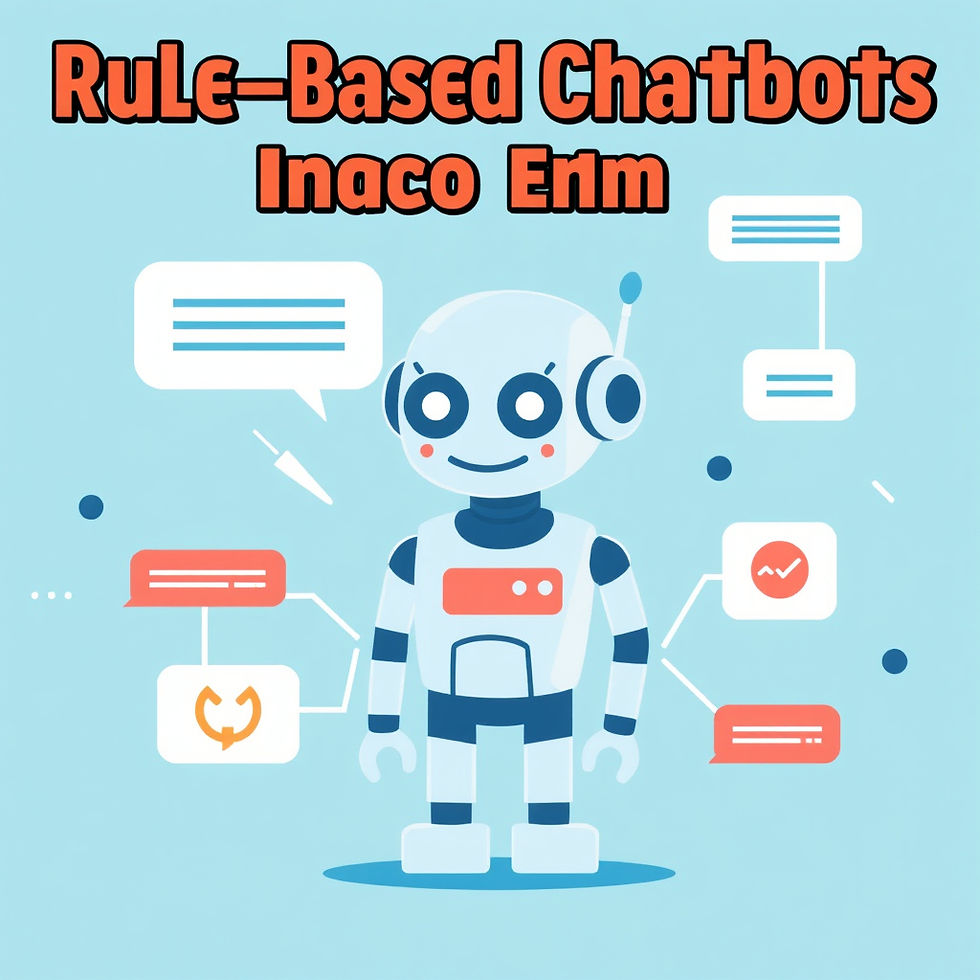
How Do Rule-Based Chatbots Work?
The structure of the rule-based chatbots function on simple pre-set instructions. When a user clicks an option or types something familiar, the system checks it against what it has been programmed to recognize and sends the related reply.
The interaction moves in a guided direction because everything is planned in advance. If the message doesn’t match the expected input, the chatbot usually cannot continue the conversation properly.
Benefits of Choosing Rule-Based Chatbots
There’s a reason rule-based AI assistants haven’t disappeared despite emerging AI advancements.
- They are still efficient for many businesses. They can easily handle repetitive queries such as FAQs, appointment booking, order status, and onboarding questions instantly.
- They are easier to maintain. Updates don’t require retraining models. You simply adjust the flow.
- They are cost-effective. Development is lighter. Infrastructure is simpler. ROI is easier to measure.
Most importantly, they reduce pressure on support teams without introducing unnecessary technical complexity.
Where Rule-Based Chatbots Make the Most Sense
Deep contextual understanding is not necessary in every customer interaction. In some cases, simple, yet effective automation works well. This limits unnecessary spending on complete AI automation.
You can rely on rule-based chatbots for:
Lead qualification funnels
Service request routing
Customer support FAQs
Internal HR help desks
Booking and scheduling systems
If 70% of your incoming queries follow predictable patterns, automation doesn’t need to be “smart.” It needs to be structured.
When Simplicity Becomes Strategy
There’s a tendency to jump straight into AI-driven solutions. Sometimes that works. Sometimes it creates more moving parts than needed.
Businesses evaluating automation often discover that starting with rule-based systems provides clarity. It defines workflows. It exposes gaps. It builds operational discipline.
And from there, scaling becomes intentional; not experimental.
For organizations exploring conversational automation, the real question isn’t “Do we need AI?”
It’s “What problem are we trying to solve?”
When the goal is consistency, speed, and operational efficiency, rule-based chatbots remain a practical and strategic starting point. And designing them correctly from day one is where thoughtful technology partnerships begin to matter.

Comments